
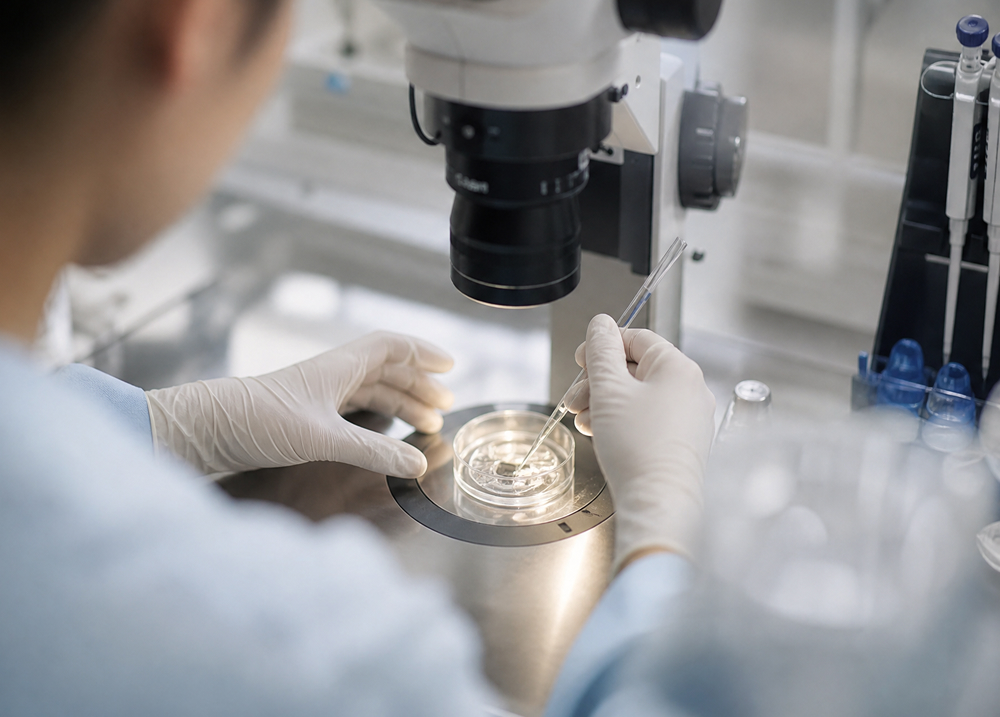

GM-CSF protein is a key medical breakthrough that addresses the challenge of ‘high-grade embryos failing to implant’ during ICSI treatments. By incorporating this protein into the embryo culture media, it mimics the natural uterine environment, enhancing success through three key mechanisms: reducing cellular stress, modulating the maternal immune response to prevent embryo rejection, and supporting early placental development. This technology is especially beneficial for patients with repeated implantation failure (RIF), recurrent miscarriage, advanced maternal age, or a limited number of embryos, helping improve implantation success and achieve a healthy pregnancy.
Many couples undergoing IVF experience disappointment when a well-developed embryo fails to implant after transfer.
This is because success depends not only on fertilization but also on the “environment” that supports the embryo’s ability to attach to the uterine lining. This critical stage is where the GM-CSF protein and its role in increasing the chances of pregnancy become essential. By simulating natural biological conditions, this protein helps create an optimal environment for implantation and improves overall treatment outcomes.
GM-CSF (Granulocyte-Macrophage Colony-Stimulating Factor) is a naturally produced protein in the body during early pregnancy. After fertilization, as the embryo travels to the uterus, the body releases this protein as a “key factor” in supporting successful implantation.
GM-CSF protein and its role in increasing the chances of pregnancy are closely linked, as it functions in three major ways:
To better understand how GM-CSF helps improve embryo implantation success, let’s explore its three core mechanisms:
Cellular Stress Protection & Energy Support
In early development, embryos require significant energy for cell division and growth. This process creates cellular stress, which may cause embryos to weaken or stop developing.
Cryopreserved embryos, in particular, often experience higher stress levels, increasing the risk of apoptosis (cell death). GM-CSF helps reduce this stress and supports cellular energy.
Immune Tolerance & Modulation
The uterine immune system typically functions as a defense mechanism, identifying and eliminating foreign substances. Since an embryo contains genetic material from both parents, the maternal immune system may mistakenly identify it as a threat.
GM-CSF helps regulate this response by signaling immune cells to tolerate the embryo, promoting acceptance rather than rejection. This mechanism significantly improves implantation conditions and reduces early embryo rejection risk.
Early Placentation & Attachment Support
During implantation, outer embryo cells develop into the syncytiotrophoblast, which penetrates the uterine lining to form the placenta.
GM-CSF enhances this process by supporting proper cell differentiation and strengthening implantation. It also stimulates the production of hCG (pregnancy hormone), helping stabilize early pregnancy and reduce the risk of embryo detachment.
In ICSI procedures, embryos are cultured in a controlled incubator environment that regulates temperature, gas composition, humidity, and pH to mimic natural conditions.
Despite precise control over physical laboratory conditions, the absence of essential maternal secretions and proteins remains a significant limitation of in vitro culture. Incorporating GM-CSF into the culture media helps recreate this natural environment, effectively supporting early embryo development.
The use of embryo culo implantation success, is particularly suitable for individuals facing the following challenges:
Yes. GM-CSF is a naturally occurring protein in the human body. Its use in IVF simply replicates natural conditions to support early embryo development.
Yes. Genetic testing selects healthy embryos, while GM-CSF supports implantation, making them complementary approaches.
No. GM-CSF works after fertilization, supporting embryo development rather than improving egg or sperm quality.
No. It does not change the treatment timeline, as it only involves modifying the culture medium used in embryo development.