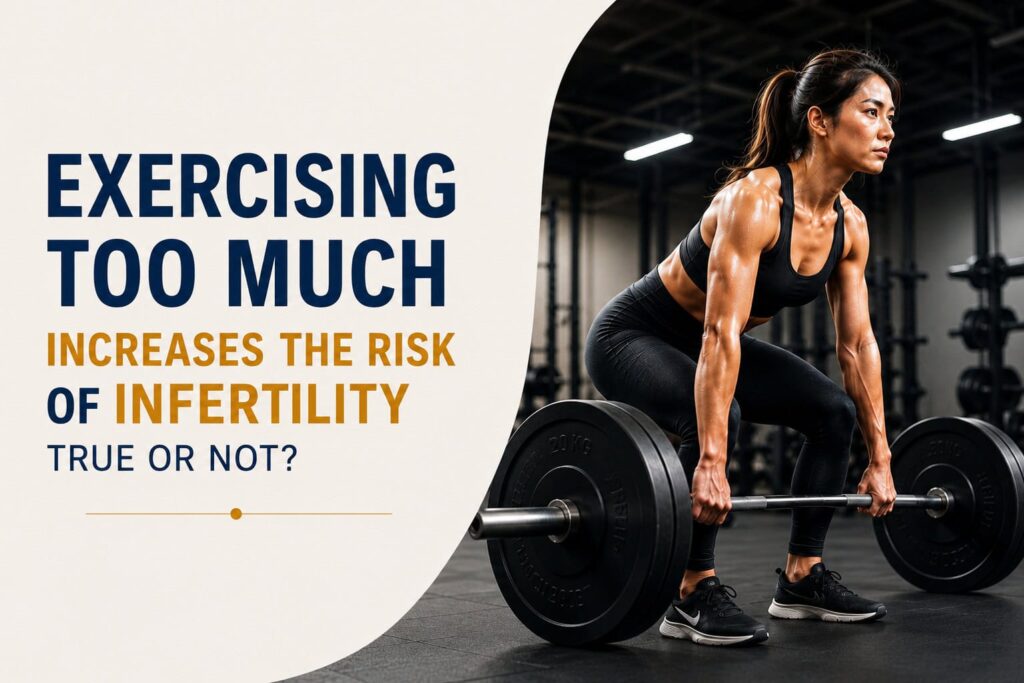
Nowadays, many people are paying more attention to their health through exercise. However, many may wonder whether exercising too much can make it harder to conceive, especially those who are planning to have a baby or are undergoing fertility treatment. While exercise offers many health benefits, excessive or overly intense physical activity may affect hormonal balance and the reproductive system.
Key Takeaway
Moderate exercise can support overall health and fertility. However, prolonged high-intensity exercise, especially when combined with inadequate nutrition or insufficient rest, may affect hormone balance, ovulation, and sperm quality. For individuals trying to conceive, maintaining a balanced exercise routine is important.
How Does Exercise Affect Fertility?
Research suggests that moderate physical activity can help reduce inflammation, maintain a healthy weight, and support hormonal balance, all of which play important roles in fertility. However, the relationship between exercise and fertility is complex, and its effects may vary depending on the intensity, duration, and an individual’s overall health condition.
Can Excessive Exercise Affect Your Chances of Having a Baby?
In women, long-term high-intensity exercise, particularly when energy intake is insufficient, may disrupt the balance of reproductive hormones such as follicle-stimulating hormone (FSH) and luteinizing hormone (LH). This can lead to irregular ovulation, irregular menstrual cycles, or even missed periods, which may reduce the chances of conception over time. Excessive exercise may also increase cortisol levels, commonly known as the stress hormone, which can further interfere with reproductive hormone balance and ovarian function.
In men, prolonged excessive exercise may affect testosterone levels, a hormone that plays an essential role in sperm production. Intense training may also increase oxidative stress, which can negatively impact sperm quality, motility, and genetic integrity.
Warning Signs You May Be Exercising Too Much
While exercise is beneficial for health, consistently pushing your body beyond its limits may affect both overall well-being and fertility. Signs of overtraining may include:
- Persistent fatigue or low energy
- Difficulty sleeping or poor-quality sleep
- Decreased exercise performance
- Frequent injuries or slow recovery
- Rapid weight loss
- Irregular or absent menstrual periods in women
- Reduced libido
- Mood changes or increased stress
If you experience these symptoms while trying to conceive, it may be a sign that your body is under excessive physical stress.
How to Exercise in a Balanced Way When Trying to Conceive
For individuals planning to have a baby, the goal is not to exert as intensely as possible, but to maintain overall health and balance. Consider the following recommendations:
- Aim for 150–300 minutes of moderate-intensity exercise per week
- Combine cardiovascular exercise with appropriate strength training
- Consume enough calories to support your activity level
- Get at least 7–9 hours of sleep each night
- Schedule at least 1–2 rest days per week
- Avoid rapid weight loss or restrictive dieting
- Manage stress alongside your exercise routine

A balanced lifestyle supports overall health and helps maintain normal hormone function, ovulation, and sperm production, all of which are important for successful conception.
What Should You Do If You’re Still Not Pregnant After Making Lifestyle Changes?
Although appropriate exercise , weight management, and healthy lifestyle habits can support fertility, some individuals may have additional factors affecting their ability to conceive, such as age, egg quality, sperm quality, or underlying infertility conditions.
If you have been trying to conceive naturally for some time without success, it is advisable to undergo a fertility evaluation with a reproductive specialist. Identifying the underlying cause can help determine the most appropriate treatment plan. In some cases, assisted reproductive technologies (ART), such as intrauterine insemination (IUI) or intracytoplasmic sperm injection (ICSI), may be recommended to improve the chances of pregnancy.
Consult the fertility specialists at VFC Center for guidance on planning your fertility journey
Good health is not about exercising as hard as possible it is about maintaining balance. If you are planning to have a baby, evaluating your fertility health while paying attention to nutrition, rest, and appropriate exercise can help improve your readiness for pregnancy.
At VFC Center (V-Fertility Center), our fertility specialists are ready to provide personalized fertility assessments and guidance to help you plan your path to parenthood with confidence.
Article by Dr. Sorramon Songveeratham
Obstetrics and Gynaecology-Reproductive Medicine
Contact or Book a Consultation:
VFC Center – V-Fertility Center
Hotline: 082-903-2035
LINE Official: @vfccenter